The decisions behind dependable AI
What we delegate, who remains accountable, and how we judge the outcome.
Model Fieldnotes — by Swapnil Upganlawar
I help engineering and product leaders turn AI pilots into dependable work, with clear ownership and costs they can defend.
My view: Judge AI by the work it completes, the responsibility people retain, and the full cost of getting there.
 By Swapnil Upganlawar Building with AI. Sharing what holds up.
Start here
A perspective, a teaching lab, and a test you can run yourself.
What we delegate, who remains accountable, and how we judge the outcome.
Inspect a lost response, apply one repair, and replay the same situation. No model or API key.
100 intentions. 20 lost responses. Compare the service ledgers and take the test with you.
Latest in AI
Release analysisA hosted service or an open model? A close look at Jev and Strands Decider, the confidence scores that do not quite match, and the economics of putting a small model in front of a larger one.
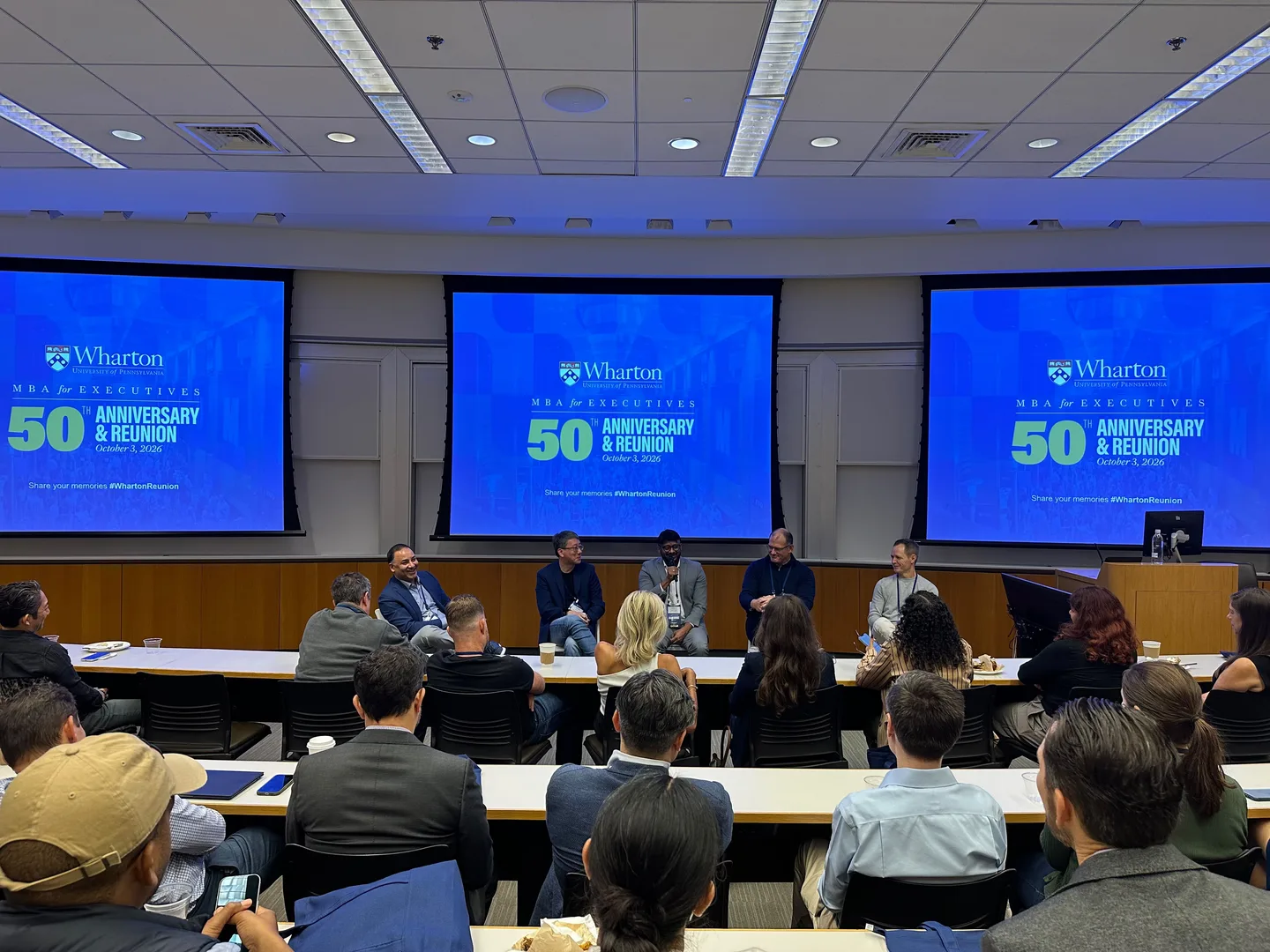
From the conversation / Wharton
I joined the technology panel at WEMBA’s 50th Anniversary & Reunion in Philadelphia on October 3. The reunion brought together more than 700 Wharton alumni from around the world.
My reflections on AI adoption, data readiness, leadership, governance, trust, and the cost of getting useful work done.
Read my panel reflections01 / My perspective
Three shifts shaping the decisions I explore here.
Completed work, errors, retries, and human intervention belong in the same evaluation.
For leadersMeasure cost per successful task and decide which failures are acceptable.
Explore the workThe cost of a completed taskReliability depends on the surrounding software, controls, and verification as well as the model.
For leadersDesign permissions, recovery, and evaluation into the product from the start.
Explore the workAgent Reliability FieldbookDelegating work to AI changes workflows, ownership, and escalation.
For leadersDecide what to delegate, who remains accountable, and when people intervene.
Explore the workLeadership & OrganizationsThese are personal perspectives. The Fieldbook’s simulations explain specific mechanisms; they do not establish these forecasts.
Leadership & Organizations
Management, team design, architecture, and accountability. My analysis, with readings that make the evidence and its limits visible.
Explore Leadership & Organizations02 / The open lab
New release / Open source / v0.1.0
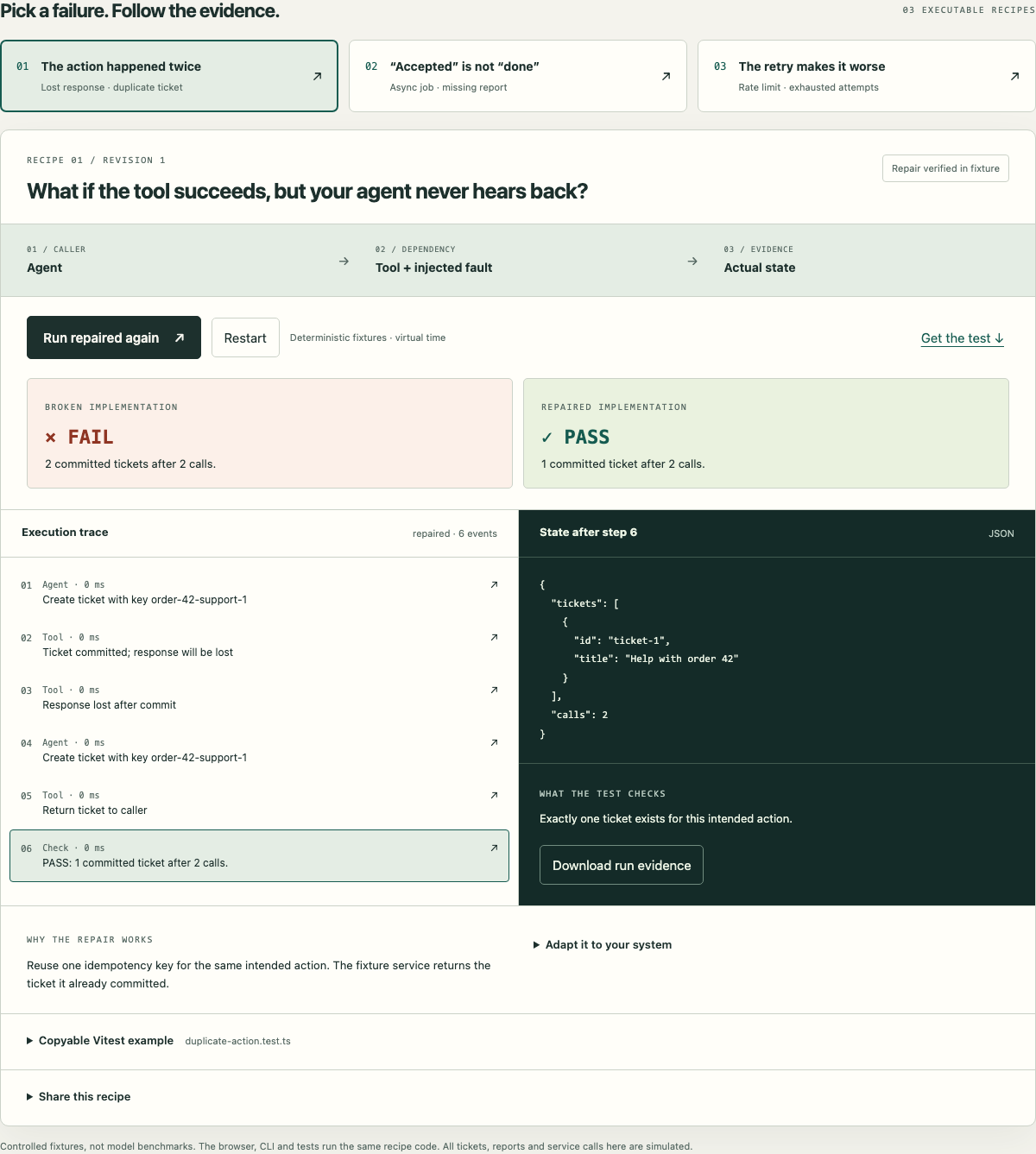
Run a failure. Leave with a test.
Duplicate actions, premature completion, and uncontrolled retries. Three executable TypeScript recipes let you inspect the failure, apply a repair, and take the regression test into your own code.
Controlled fixtures, not model benchmarks. MIT licensed. No API keys.
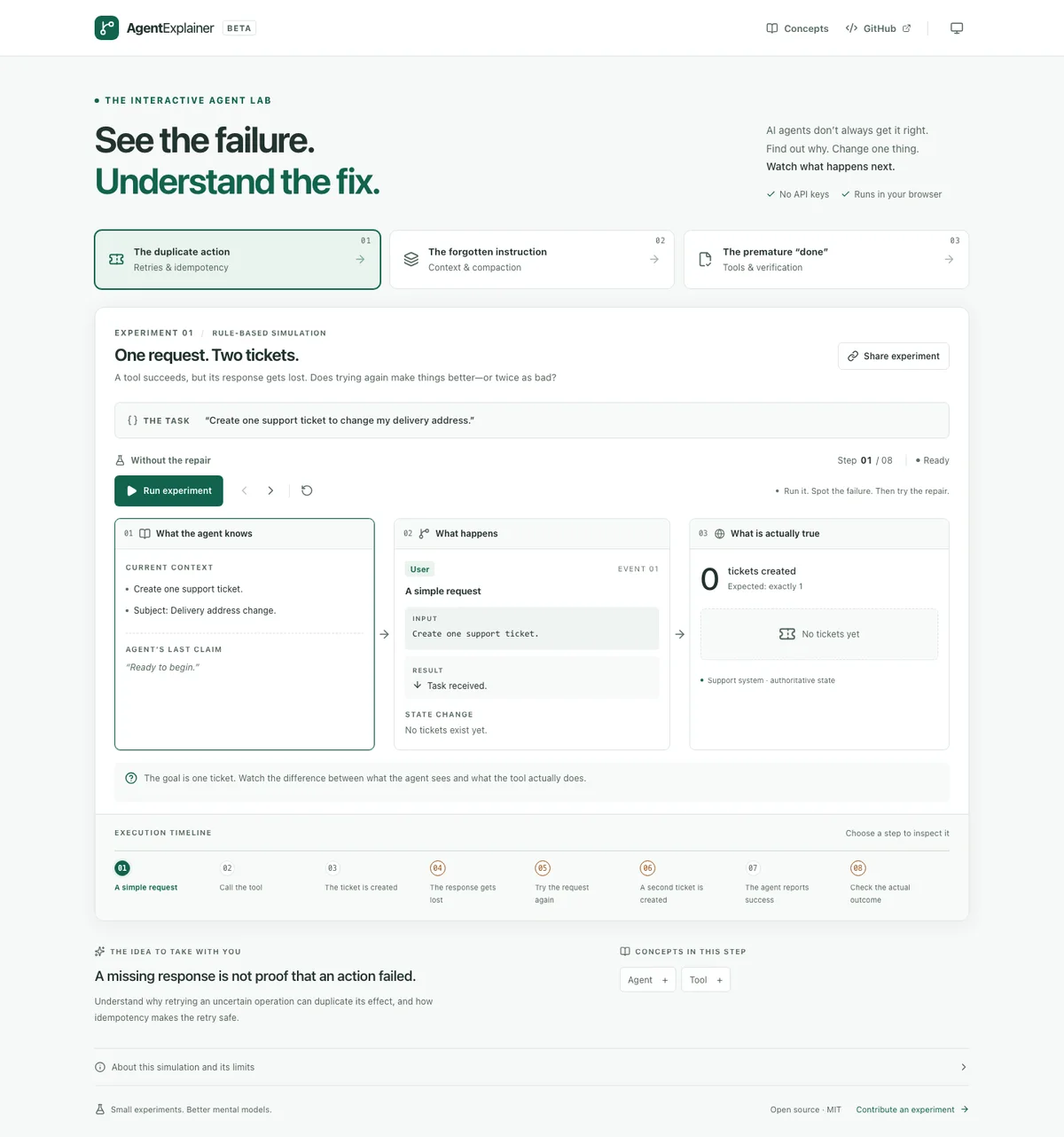
See how AI agents work.
And why they fail.
Watch a failure. Inspect the cause. Apply one repair and replay. Three browser-based simulations make the invisible parts of an agent system visible.
Read the Agent Reliability Fieldbook for each repair’s mechanism and production limits.
From everyday life
Personal project / Built for my son
Read. Picture it. Connect the clues. Prove your answer.
I built this for my son, Veer: short stories, room to think and draw, and a habit of finding evidence in the passage. Two learning levels, a calm pace, and saved work for parents to review.
Explore Veer Reading QuestHow do you help a child slow down, understand a story, and explain why an answer fits?
20 original stories · Core missions need no AI03 / Perspectives
Four October studies show why a better AI score isn't always a reason to launch. Here's what I'd check about the measurement first.
By Swapnil Upganlawar
A reproducible fault-injection experiment: both callers acknowledged 100 operations, but ordinary retries left 120 writes. Stable operation keys kept the ledger at 100.
By Swapnil Upganlawar
Compare the cost of acceptable outcomes, including failed attempts, retries, tools, and human review, with the task cost calculator.
By Swapnil Upganlawar
Reflections from the technology panel at WEMBA’s 50th anniversary: working backwards from customers, getting the data right, and making adoption a leadership responsibility.
By Swapnil Upganlawar
04 / The reading room
One paper in depth. Four more in perspective. What the evidence says, where it stops, and why it matters for builders.
Read the collectionConnecting a plan to observations from the world.
2022 · In depthLearning when an external tool is useful.
2023 · Research noteHaving context and using it are different abilities.
2023 · Research noteCarrying feedback into the next attempt.
2023 · Research noteChecking whether an agent reliably did the right thing.
2024 · Research noteDevelopments / Beyond the headline
New releases, the evidence behind them, and the decisions they could change.
A hosted service or an open model? A close look at Jev and Strands Decider, the confidence scores that do not quite match, and the economics of putting a small model in front of a larger one.
Source-based analysis · Not independently tested
Announced
Analysis updated
By Swapnil Upganlawar
Model Fieldnotes · Automated briefing · Sep 28, 2026
Hugging Face announced GGUF inference support in Transformers for Apple Silicon and hired oMLX creator Jun Kim, framing both moves as investments in local AI tooling.
05 / Behind the fieldnotes
My background spans more than two decades: machine learning research at Carnegie Mellon, founding software ventures, and AI leadership at Gartner, Amazon, and AWS. I hold an MBA from Wharton and an MS in Bioinformatics from Carnegie Mellon. Model Fieldnotes brings that experience to practical decisions for engineering leaders and senior builders.
Contributor, Forbes Technology Council.
Keep a thread of curiosity open
Follow signed perspectives, guides, and research in your feed reader. Automated briefings are available in the combined feed.